

People move to Franklin when they’re ready for a fundamental shift in how they live. The decision usually comes after years in major metros like New York, Los Angeles, Chicago, or San Francisco, where space is limited, commutes dominate schedules, and privacy requires compromise. Franklin offers something different: meaningful acreage, a slower pace, proximity to Nashville without urban intensity, and communities built around long-term roots rather than constant turnover.
This isn’t a relocation guide in the traditional sense. It’s a local perspective for understanding what daily life actually looks like here, how buyers make decisions, and whether the tradeoffs align with long-term priorities.
Franklin sits at the intersection of several things: proximity to Nashville, preserved small-town character, estate-level properties on meaningful acreage, and a community that attracts people who stay.
Understanding those elements and how they interact helps clarify whether this is the right choice.
What Brings Buyers to Franklin
Most people considering Franklin are thinking about more than just a new address. They’re reconsidering schools, commutes, how much land their children have access to, and whether they want to put down roots in a place where neighbors stay for decades rather than years. The move often coincides with professional shifts: remote work that makes location more flexible, entrepreneurship that no longer ties someone to a specific office, or career stages where airport access matters more than being downtown daily.
Franklin attracts professionals and entrepreneurs who want space to build something lasting. Families who’ve lived in excellent urban neighborhoods but are ready for a different kind of excellence: one measured in acreage, privacy, and the ability to let life unfold at a more deliberate pace.
Franklin’s residential landscape skews toward established properties on larger lots, custom builds on two to ten acres, and estate-level compounds where privacy matters. New construction exists, but much of what draws long-term buyers is the existing housing stock: well-built, well-maintained, and situated in ways that reflect thoughtful planning rather than maximum density.
The Pace and Character of Daily Life
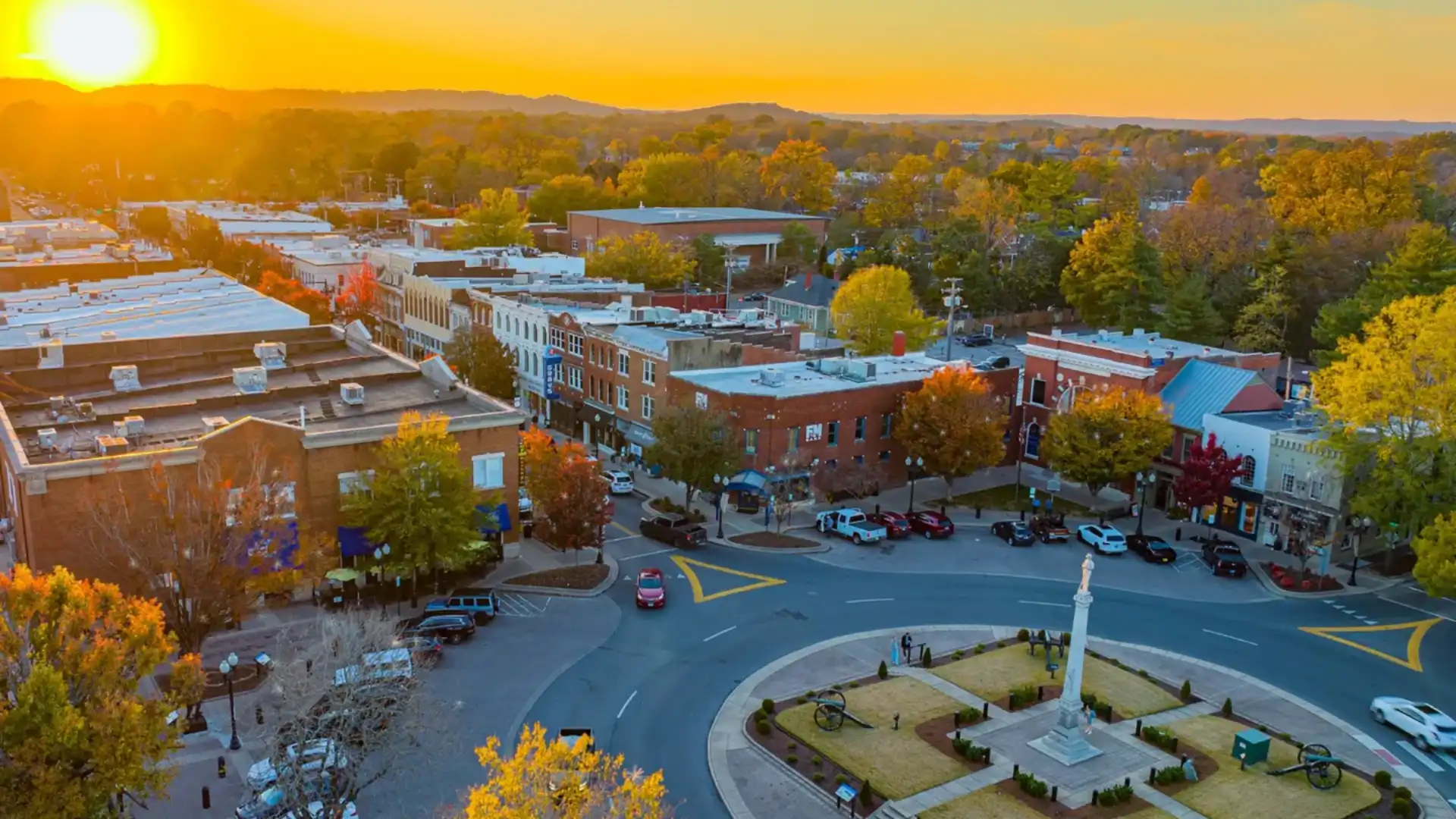
The downtown area is walkable, preserved, and active without being crowded. Main Street has independent shops and restaurants. There’s a farmer’s market and seasonal events.
Outside of downtown, the pace shifts. Neighborhoods are quiet. Roads are tree-lined. Properties are set back from the street, often gated, with long driveways. You don’t see your neighbors constantly, but when you do, the interactions tend to be intentional. This appeals to buyers who want their home to feel like a retreat and aren’t looking for tight-knit suburban density.
For relocators, this shift can be challenging to adjust to. The lifestyle here centers on home, family, and a slower pace of building relationships. That strongly appeals to some buyers, but it’s worth understanding before committing.
Land, Privacy, and How Homes Are Situated
One clear distinction between Franklin and other markets is how homes relate to land. In many neighborhoods, luxury is defined by square footage and finishes. In Franklin, it often means acreage. Five acres isn’t unusual. Ten isn’t rare. Properties with twenty or more acres exist and attract buyers who view land as a long-term hold.
This creates a different kind of privacy. Driveways are long enough that arrival feels separate from the public road. Homes are positioned to maximize views, sunlight, and distance from neighbors.
Not every property sits on large acreage. Established neighborhoods closer to downtown offer more conventional lot sizes, typically one to two acres, with homes that emphasize architecture and landscaping. These areas appeal to buyers who want walkability to Main Street and historic character. The tradeoff is density, but it’s still different from urban or typical suburban living.
Understanding how land is used here shapes everything else. School bus routes are longer. Neighbors are further apart. Maintenance responsibilities increase. But for buyers who value separation, who want their children to have room or want to look out at unobstructed land, Franklin delivers.
Schools, Families, and Long-Term Roots
Williamson County’s school system is one of the most consistent draws for families relocating to Franklin. It’s routinely ranked among the best in Tennessee and is competitive nationally. What matters most is stability. Families move here knowing they won’t need to move again in five years. Quality is consistent across elementary, middle, and high school levels, and private options exist.
Turnover is low. Families buy with the intention of staying through their children’s school years and often beyond. Relationships develop slowly but tend to be durable. Parents know each other. Children grow up together.
Relocators are common enough that the community absorbs them naturally. But the culture rewards long-term thinking. People invest in relationships and local institutions over years rather than months. For families tired of moving and shallow networks, Franklin offers a different model.
Proximity Without Compromise
Franklin sits roughly twenty miles south of downtown Nashville. That’s close enough to access the city when needed but far enough to feel removed. The commute takes 30 to 40 minutes under typical conditions, longer during peak traffic. For professionals who need to be in Nashville occasionally rather than daily, the proximity works. For remote or travel-based work, it’s not an issue.
Nashville International Airport is accessible, and direct flights to major hubs make travel manageable. Local amenities are well-developed. Franklin has grocery, retail, and dining options without requiring trips into Nashville. The CoolSprings area offers additional commercial density. Healthcare is strong, with Williamson Medical Center providing comprehensive services.
Franklin’s location means development pressure is real. The area is growing. Buyers who prioritize preservation should understand that while Franklin has been thoughtful in managing growth, market dynamics around Nashville affect everything within commuting distance.
What Buyers Should Understand Before Choosing Franklin
Franklin suits buyers who prioritize land, privacy, and long-term stability. Families who want excellent schools without sacrificing space. Professionals who need proximity to Nashville but prefer a residential setting. Buyers who view real estate as a long-term hold.
But Franklin isn’t for everyone. Buyers seeking walkable urban density won’t find it outside the small downtown core. Those who want entertainment at their doorstep will quickly notice the difference from major metros. Inventory at higher price points may be limited, and when the right property becomes available, decisions need to be made efficiently.
For those considering a move, the decision often comes down to lifestyle over location. Franklin offers something increasingly difficult to find: the ability to live on meaningful acreage, maintain privacy, access excellent schools, and stay within reasonable proximity to a growing city.
Thoughtful guidance from advisors who understand both the market and the broader context of luxury homes and condominiums across Middle Tennessee can help clarify whether Franklin aligns with long-term priorities.
More Blogs You Might Find Interesting
– The Best Ice Cream Spots in Nashville
– Affordable cities near Franklin
– Relocating to Tennessee? Moving Checklist.
Social Cookies
Social Cookies are used to enable you to share pages and content you find interesting throughout the website through third-party social networking or other websites (including, potentially for advertising purposes related to social networking).