

Renting vs. Buying a Home in Nashville: What the Numbers Actually Show.
Renting can feel like the sensible move. No large down payment, no surprise repairs, no long-term commitment. Then the renewal letter arrives and your rent goes up again. You realize you have been paying someone else’s mortgage for years without building a dollar of equity.
The conventional wisdom says buying is out of reach right now. But when you actually run the numbers on renting vs. buying a home in Nashville and the broader South, the math tells a different story.
Is Buying a Home Actually More Affordable Than Renting Right Now?
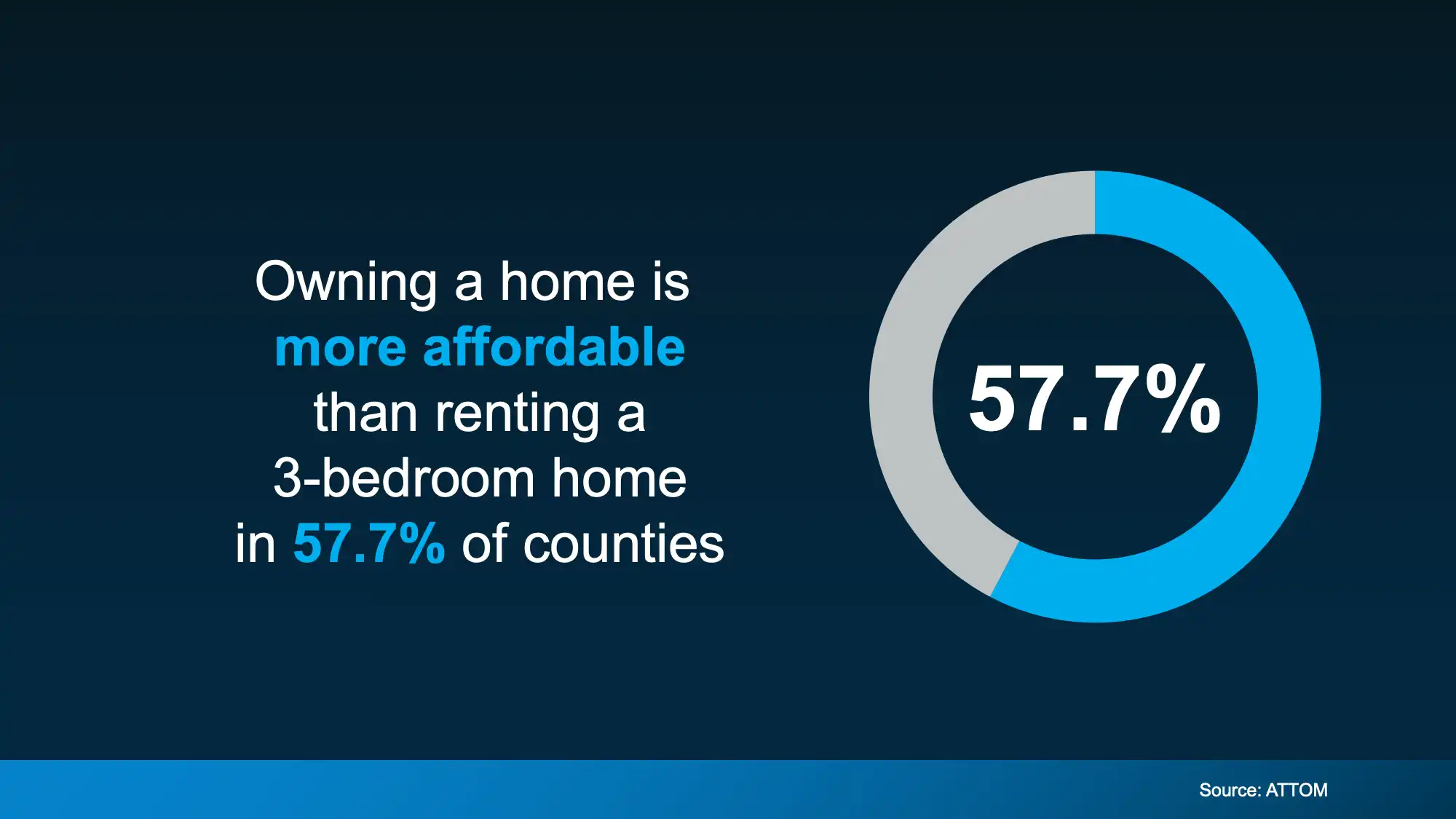
According to ATTOM data, owning a home is now more affordable than renting a comparable 3-bedroom home in 57.7% of counties across the United States. That figure accounts for insurance and typical maintenance costs, not just the mortgage payment. When you line those two numbers up, ownership comes out ahead in more than half the country.
The shift comes down to three things working together: home price growth has slowed, inventory has increased, and mortgage rates have begun to ease from their recent peaks.
How Does the South Compare to the Rest of the Country?
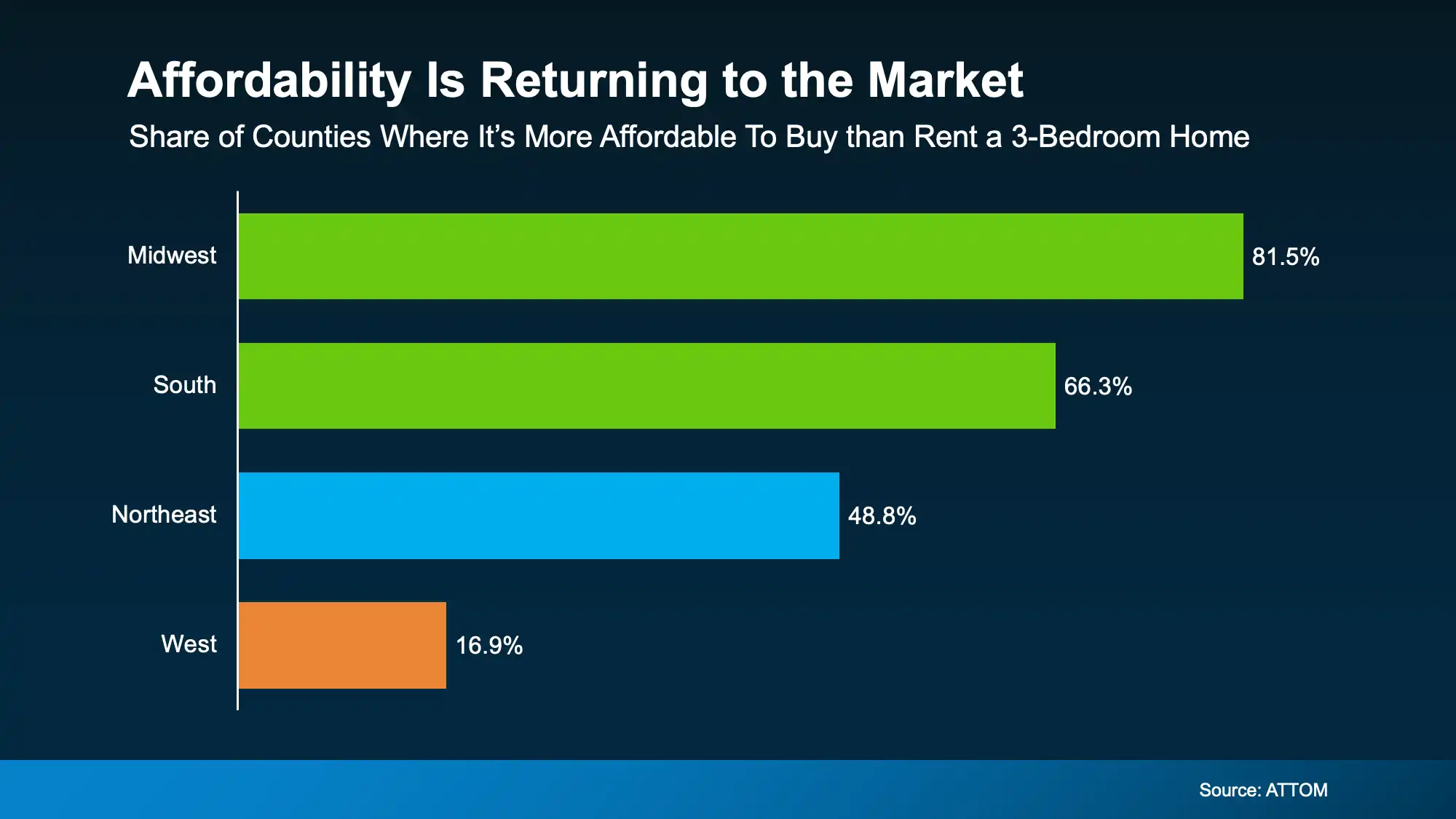
In 66.3% of Southern counties, buying a 3-bedroom home is more affordable on a monthly basis than renting one, according to ATTOM. That places the South behind only the Midwest at 81.5%. The Northeast sits at 48.8% and the West, where prices remain elevated, comes in at just 16.9%.
Middle Tennessee sits inside that Southern advantage. Nashville has seen meaningful inventory growth over the past 18 months and price appreciation in many zip codes has leveled off from 2021 and 2022 peaks. For renters in Nashville, Brentwood, or Franklin, the monthly ownership-versus-rent comparison has narrowed in ways that were not true two years ago. The market heading into 2026 tells a more nuanced story than the headline averages suggest.
What Is Actually Holding Buyers Back in Middle Tennessee?
For most renters weighing this decision, the monthly payment is not the primary obstacle. The upfront cost is. A down payment on a median-priced Nashville home requires meaningful cash, and closing costs add another layer. Those two line items are usually where the mental calculation breaks down.
What most renters do not hear enough about is how many options exist to bridge that gap. Running the numbers on financing at this price range often surfaces assumptions worth revisiting, especially once assistance programs enter the picture.
How Much Down Payment Assistance Is Available to Nashville-Area Buyers?
Thousands of down payment assistance programs operate at the federal, state, and county level. Tennessee has several through the Tennessee Housing Development Agency, and both Davidson and Williamson counties run programs with specific eligibility windows. Most renters do not know they qualify.
The average assistance benefit runs approximately $18,000. That can cover a meaningful share of a down payment, closing costs, or both. A buyer who assumes they need $40,000 saved may need considerably less once assistance is factored in. The purchase process for first-time buyers in this market has more accessible entry points than most people expect.
What Should Nashville Renters Do Before Making This Decision?
The rent-versus-buy decision depends on how long you plan to stay, what your savings look like, and what your credit profile supports. Someone relocating in 18 months has different math than someone staying in Nashville for the next decade.
What the data does suggest is that renting is not automatically the safer or cheaper choice in this market in 2026. The most useful next step is not a commitment. It is a conversation: real numbers based on your specific scenario and any assistance programs you qualify for. If the numbers do not work, that is worth knowing. If they do, you lose nothing by finding out now. Understanding what your current rental situation is costing you relative to building equity is a useful starting point.
Frequently Asked Questions About Renting vs. Buying a Home in Nashville
Is buying a home in Nashville cheaper than renting right now?
In many cases, yes. According to ATTOM data, buying a 3-bedroom home is more affordable on a monthly basis than renting one in 66.3% of Southern counties, which includes Middle Tennessee. The gap between owning and renting has narrowed significantly in Nashville since 2023, though the exact comparison depends on your purchase price, down payment, and local rental rates.
How much down payment do I need to buy a home in Nashville?
Conventional loans can start as low as 3% to 5% down for qualifying buyers, and FHA loans require 3.5% with a credit score of 580 or higher. Down payment assistance programs in Tennessee can offset a meaningful portion of this cost, with average benefits running approximately $18,000 for eligible buyers.
What is down payment assistance and do Nashville buyers qualify?
Down payment assistance programs are grants or low-interest loans at the federal, state, and local level to help buyers cover upfront costs. Tennessee Housing Development Agency runs several programs for state residents, with additional programs in Davidson and Williamson counties. First-time buyers and those who have not owned a home in the past three years frequently qualify.
Why is buying more affordable than renting in the South but not the West?
Home prices in Western states remain significantly higher relative to local incomes than in Southern and Midwestern markets. In the South, prices moderated faster after the 2021 to 2022 peak, inventory recovered more quickly, and property tax structures in states like Tennessee are comparatively lower, making monthly ownership costs more competitive with rental rates.
How long do I need to stay in Nashville to make buying worth it?
The general rule is that buying makes financial sense if you plan to stay at least three to five years. In that timeframe, equity built through mortgage payments and normal appreciation typically outpaces the transaction costs of buying and selling. Nashville’s steady population growth and diversified economy have historically supported consistent appreciation across most neighborhoods.
Is Nashville a good place to buy a home in 2026?
Nashville’s fundamentals remain strong: consistent in-migration, a diversified economy, and a job market that continues to attract corporate relocations from higher-cost metros. Inventory has expanded from the lows of 2021 and 2022, giving buyers more options and negotiating leverage. Price growth has moderated, improving the entry point for first-time and move-up buyers alike.
What is the biggest mistake renters make when deciding not to buy?
The most common mistake is assuming the down payment and monthly payment are prohibitive without running actual numbers specific to their situation. Many renters overestimate how much cash they need upfront and are unaware of assistance programs they qualify for. A renter who rules out buying without a real scenario from a lender is making a decision based on assumptions, not data.
The Math Has Changed. Have You Run Your Numbers?
The assumption that buying is out of reach is worth testing before you accept it. In Middle Tennessee right now, the numbers surprise most renters who actually look. If you want to know where you stand, reach out and we will run them with you.
Social Cookies
Social Cookies are used to enable you to share pages and content you find interesting throughout the website through third-party social networking or other websites (including, potentially for advertising purposes related to social networking).