

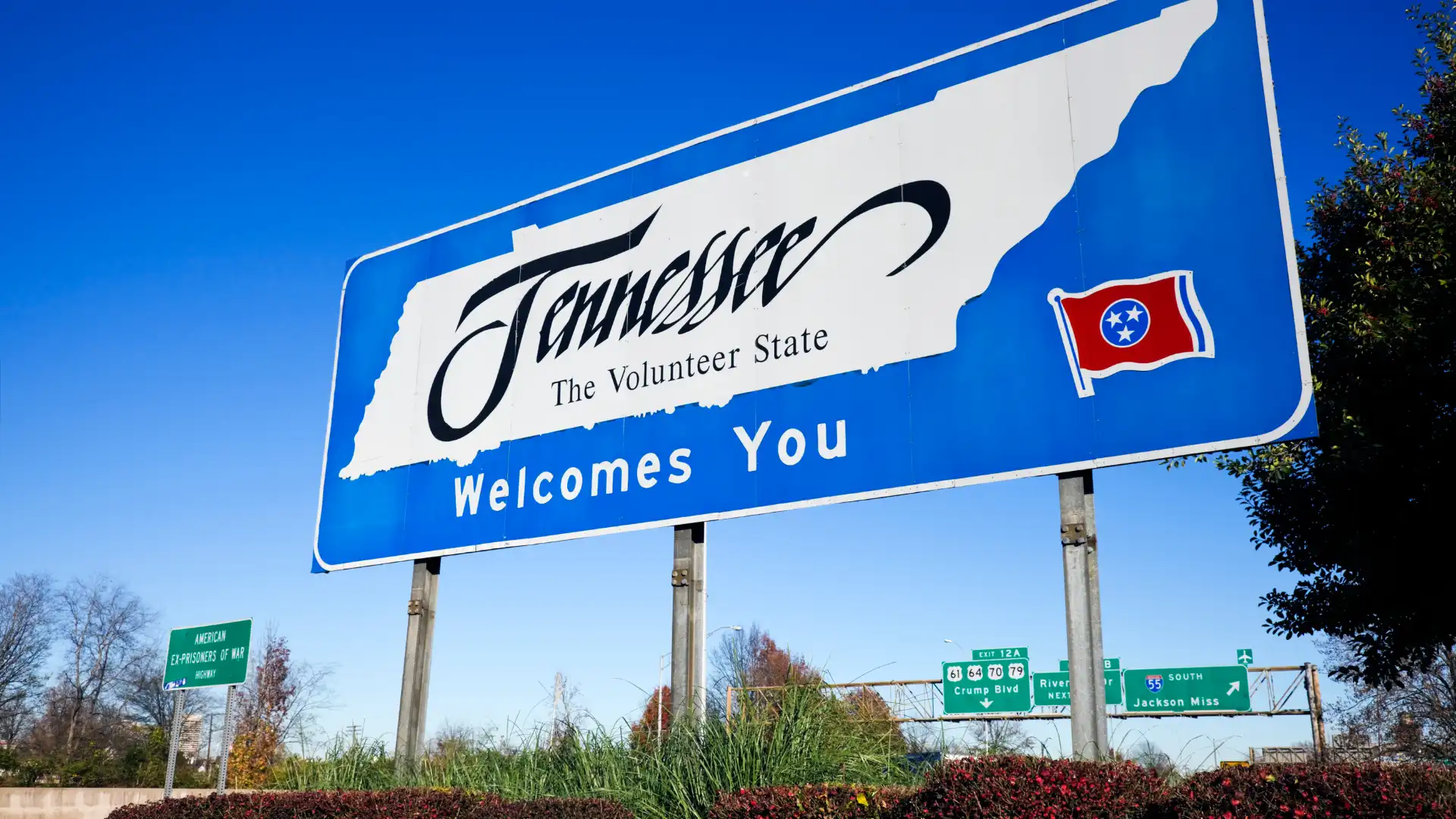
Tennessee has been attracting new residents at a pace few states can match.
According to U.S. Census Bureau data, Tennessee has ranked among the top states for net domestic in-migration for several consecutive years, drawing people from the Northeast, Midwest, and West Coast in significant numbers.
The reasons vary by person: no state income tax on wages, a lower cost of living relative to coastal metros, a genuinely mild climate, and a quality of life that holds up under close inspection. But moving to Tennessee with only the broad strokes in mind leaves a lot of room for surprises. The state is larger and more varied than most newcomers expect.
This guide covers the geography, economy, housing market, schools, healthcare, lifestyle, and administrative essentials you need to know before the boxes are packed.
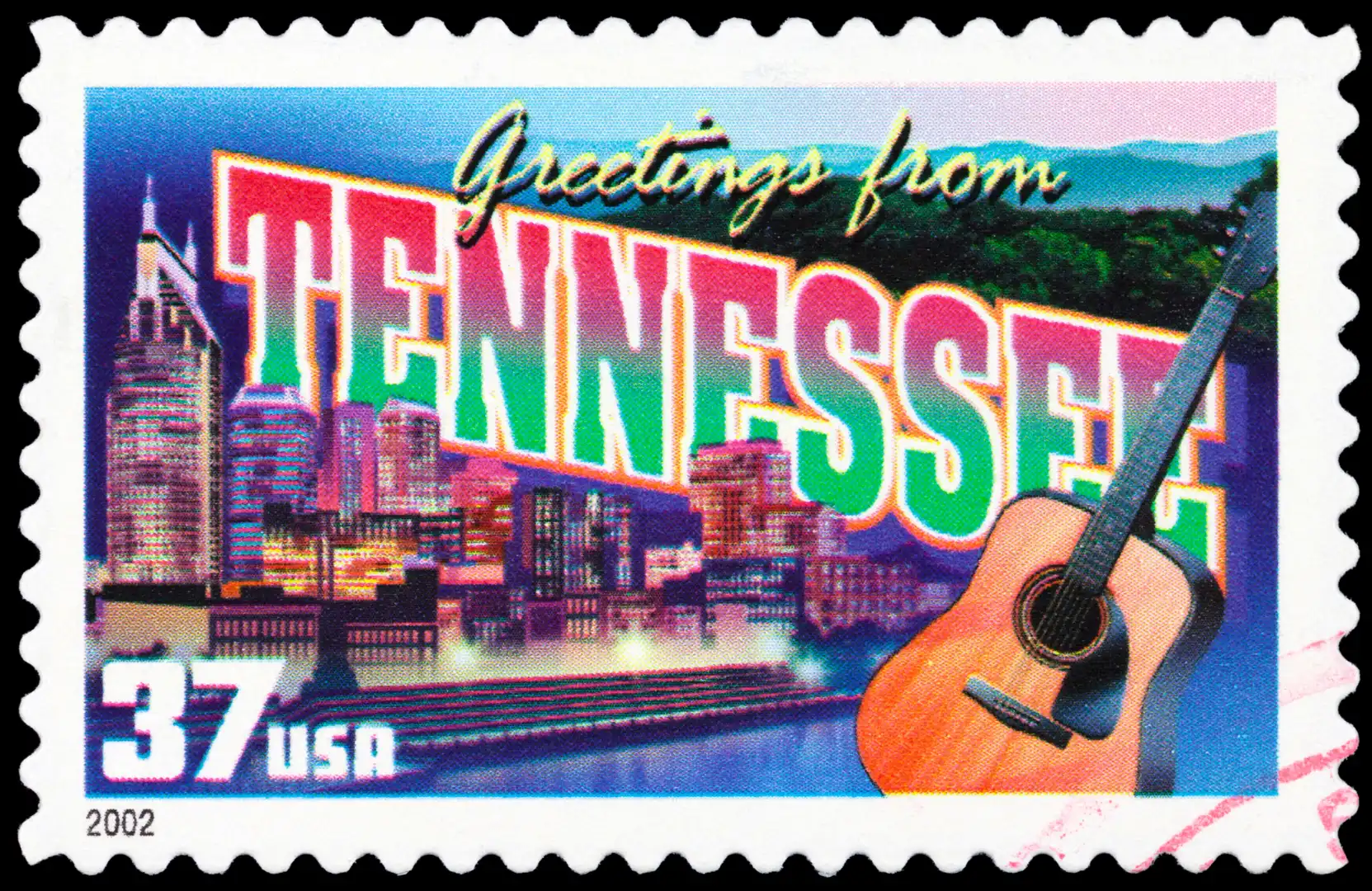
What Does Tennessee’s Geography Look Like?
Tennessee stretches nearly 500 miles from east to west, making it one of the most geographically diverse states in the country. The eastern third is defined by the Great Smoky Mountains and the Tennessee Valley. The middle third, anchored by Nashville, is characterized by rolling limestone hills and productive farmland. The western third flattens into the Mississippi Delta, with Memphis anchoring the far corner.
Most of the relocation activity in recent years has concentrated in Middle Tennessee, particularly the Nashville metropolitan area and its surrounding counties: Williamson, Rutherford, Wilson, and Sumner. This corridor offers the strongest combination of employment, school quality, housing variety, and urban amenities in the state.
Tennessee’s climate is genuinely four-seasonal. Summers are hot and humid across most of the state. Winters are mild by national standards, though ice storms in Middle Tennessee can close roads with little warning. Spring and fall are consistently excellent.
What Is Tennessee’s Economy Like?
Tennessee’s economy is broad-based and growing. Healthcare dominates in Middle Tennessee: Nashville alone is home to more than 500 healthcare companies, making the metro one of the most significant healthcare industry hubs in the United States. Manufacturing remains a major statewide employer, with automotive and advanced manufacturing facilities spread across the state, including Volkswagen in Chattanooga and multiple supplier networks.
Technology, finance, and professional services have expanded significantly, particularly in Nashville. Oracle relocated its global headquarters to Nashville in 2021. Amazon has a major operational presence across the metro. Memphis serves as a global logistics hub, anchored by FedEx’s world headquarters and one of the busiest cargo airports in the country.
| No. 1 state for net domestic in-migration U.S. Census Bureau — Tennessee has ranked among the top states for population growth driven by relocation for multiple consecutive years. |
Tennessee has no state income tax on wages. For high earners relocating from California, New York, Illinois, or other high-tax states, the financial impact is immediate. This factor has driven a substantial share of both corporate relocations and individual moves into the state over the past decade.
What Does It Cost to Buy a Home in Tennessee?
Tennessee’s housing market spans a wide range. The state’s median home price remained more affordable than the national average for much of the past decade, but high-demand markets like Nashville and its suburbs have repriced substantially. According to RealTracs MLS data, the median home price in the Nashville metropolitan area was approximately $450,000 as of early 2025.
Outside the Nashville corridor, affordability improves considerably. Chattanooga, Knoxville, and Clarksville offer median prices well below Nashville’s. Rural and small-market Tennessee remains among the most affordable housing in the Southeast.
For buyers financing a move into the Nashville area, running payment scenarios against current rates is a practical early step. Buyers relocating from out of state often benefit from working with a team experienced in compressed relocation timelines.
How Do You Get Around Tennessee?

Tennessee is a car-dependent state. Outside of a few walkable urban cores, a personal vehicle is essential for daily life. Interstate access is strong: I-40 runs coast to coast through the state’s center, I-65 connects Nashville to the broader Midwest and Gulf South, and I-24 links Nashville to Chattanooga and Atlanta.
Nashville International Airport (BNA) offers direct service to most major U.S. cities and a growing international network. Memphis International Airport serves as a major cargo hub and offers solid regional connectivity. Chattanooga and Knoxville each have regional airports with service to major hubs.
For buyers who commute frequently or work remotely and travel occasionally, proximity to an airport is worth factoring into the neighborhood decision, not just proximity to a downtown office.
What Are Tennessee’s Schools and Healthcare Like?
School quality varies significantly across Tennessee. Williamson County Schools, which serves Franklin and Brentwood in the Nashville suburbs, consistently ranks among the top public school districts in the state and draws families from across the country specifically for its schools. Metro Nashville Public Schools and other urban districts show greater variation at the individual school level. Families relocating with children should research district boundaries alongside neighborhood and price before setting their search area.
Tennessee’s healthcare infrastructure is anchored by Vanderbilt University Medical Center in Nashville, a nationally ranked academic medical center. TriStar Health and Ascension Saint Thomas operate extensive regional networks. Erlanger Health System anchors Chattanooga, and the University of Tennessee Medical Center serves Knoxville. Access to high-quality care is a genuine strength across most of the state’s population centers.
What Is the Lifestyle Like in Tennessee?

Tennessee has more texture than its country music reputation implies. Nashville’s food and arts scene rivals cities twice its size. The Smoky Mountains offer some of the most accessible wilderness in the eastern United States. Chattanooga has built a reputation as one of the most livable mid-sized cities in the country. Memphis carries a deep cultural identity rooted in blues, soul, and barbecue that has no equivalent anywhere else.
Outdoor recreation is a genuine draw statewide. Tennessee has more than 50 state parks, two national parks, multiple national forests, and hundreds of miles of river access. The pace of daily life across most of the state is noticeably different from major coastal metros: less traffic, shorter commutes on average, and a social culture that is friendly to newcomers.
Sports culture runs deep. Nashville is home to the Titans (NFL), Predators (NHL), and Nashville SC (MLS). College football dominates in Knoxville and across the state’s rural communities, shaping local calendars from August through December.
What Do You Need to Handle When You First Move to Tennessee?
Tennessee requires new residents to obtain a Tennessee driver’s license within 30 days of establishing residency and to transfer vehicle registration to the state. Both are processed through the Tennessee Department of Safety and Homeland Security.
Property taxes are assessed and paid at the county level, and Tennessee’s effective property tax rates rank among the lowest in the Southeast. Knowing which county you are settling in (Davidson, Williamson, Rutherford, Shelby, Hamilton) matters for tax rates, school enrollment, and local government services.
Utility setup and municipal services vary by city and county. A practical checklist of utilities and government services covers the main setup tasks for the Nashville area.
If you’re ready to start a home search in Middle Tennessee, connecting with alocal buyer’s agent is the most efficient first step. Reach out directly to start the conversation.
Frequently Asked Questions About Moving to Tennessee
What is the cost of living in Tennessee compared to other states?
Tennessee’s overall cost of living sits below the national average, with housing as the primary variable depending on which market you choose. The absence of a state income tax on wages is a meaningful financial advantage for most earners, particularly those relocating from high-tax states. Groceries, utilities, and everyday expenses are generally lower than in major coastal markets.
Does Tennessee have a state income tax?
Tennessee does not tax wages or salaries at the state level. The Hall Income Tax, which previously applied to investment income such as dividends and interest, was fully repealed as of January 2021. Tennessee residents owe no state income tax, making it one of the nine states in the country with no broad-based income tax.
What are the best cities to move to in Tennessee?
Nashville and its suburbs (Franklin, Brentwood, Nolensville, Hendersonville) attract the largest share of relocating buyers due to a strong job market, school quality, and urban amenities. Chattanooga draws buyers seeking a smaller city with strong outdoor access and a growing tech scene. Knoxville offers a university-city culture and proximity to the Smoky Mountains. The right answer depends on your employment situation, budget, and lifestyle priorities.
How is the weather in Tennessee?
Tennessee has a temperate climate with four distinct seasons. Summers are hot and humid across most of the state, with temperatures regularly exceeding 90 degrees from June through August. Winters are mild by national standards, though Middle Tennessee occasionally experiences ice storms that can disrupt roads. Spring and fall are consistently mild and are widely considered the best seasons to be outdoors in Tennessee.
Social Cookies
Social Cookies are used to enable you to share pages and content you find interesting throughout the website through third-party social networking or other websites (including, potentially for advertising purposes related to social networking).