

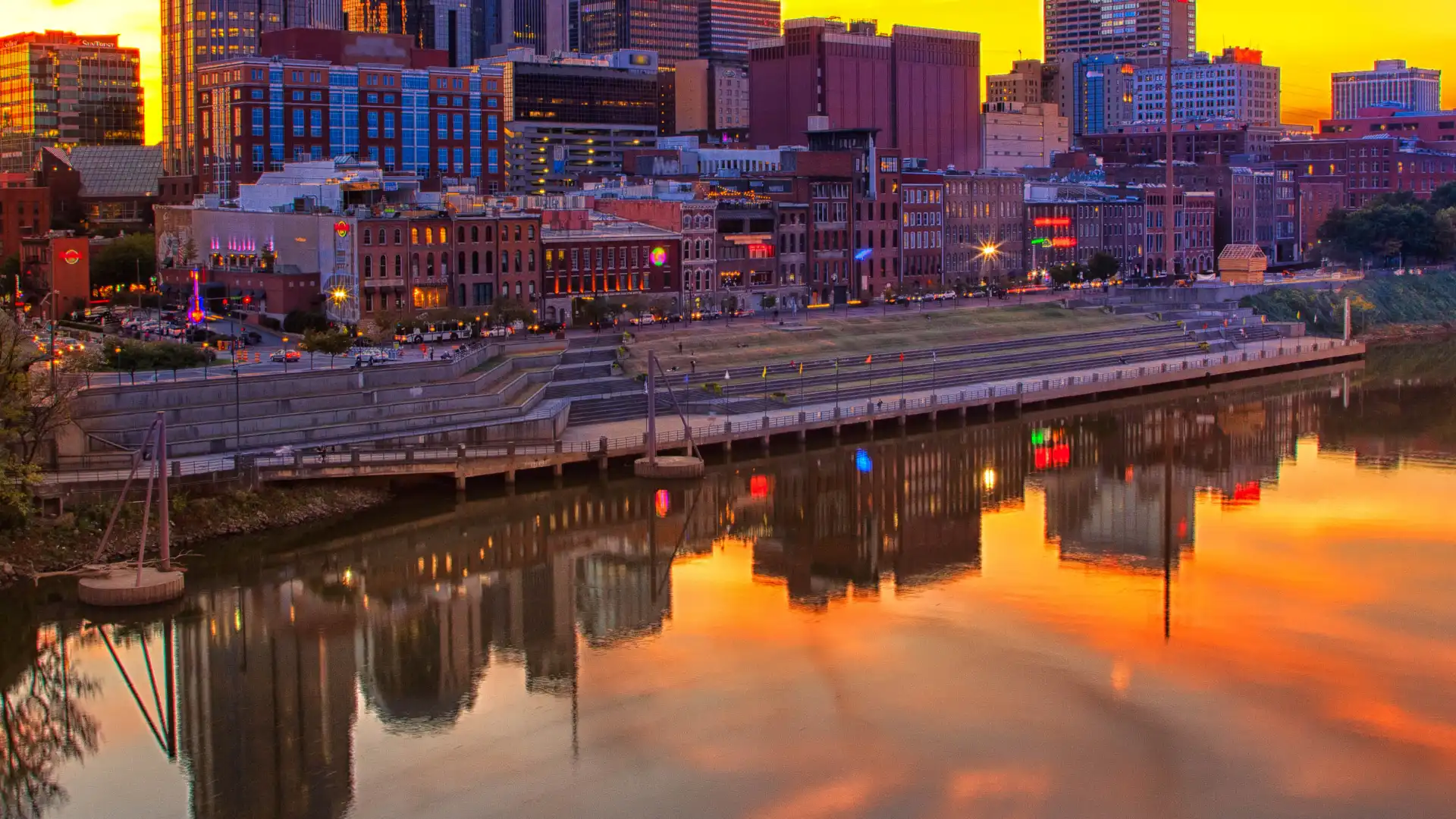
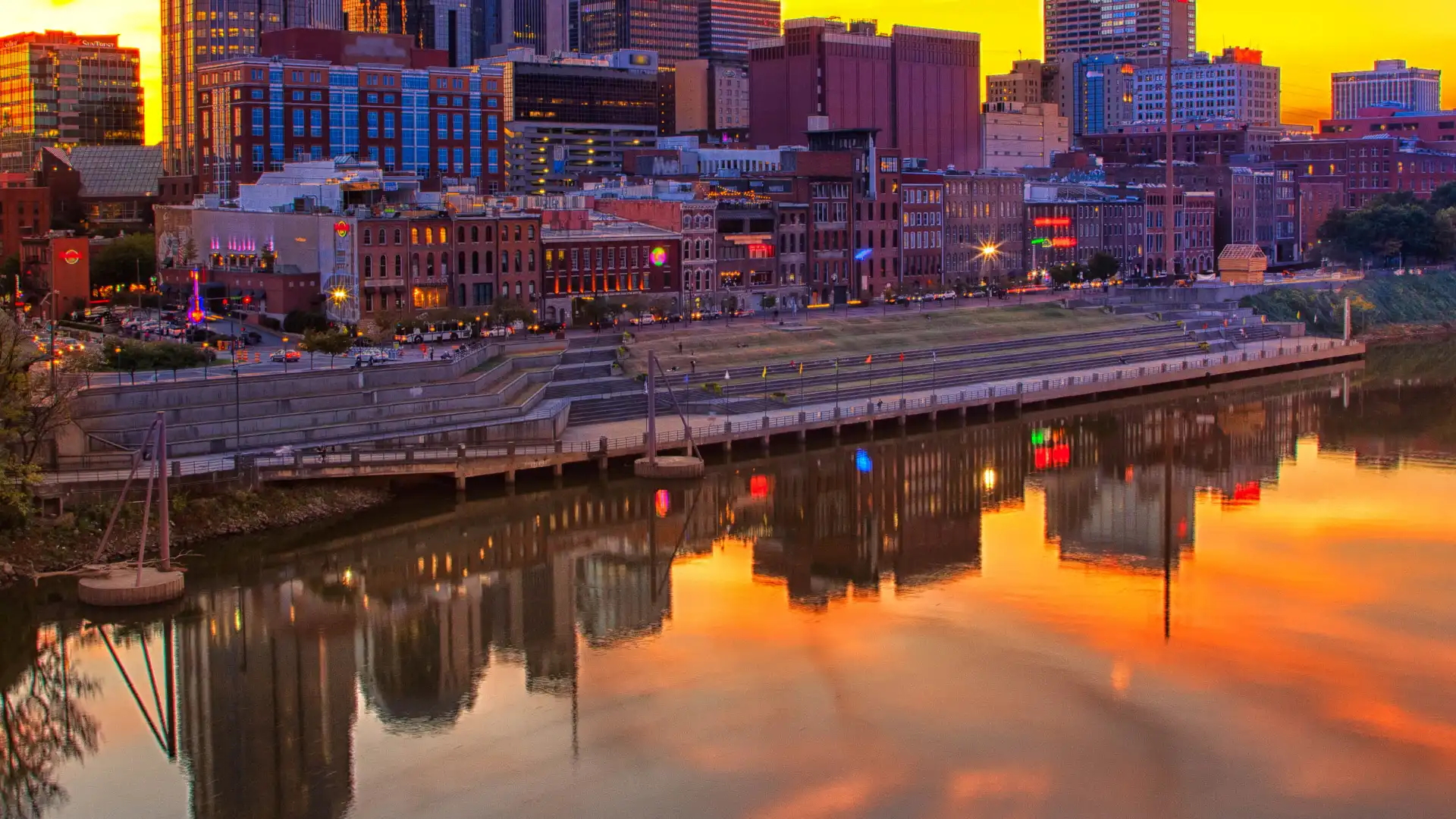
Nashville’s oldest neighborhood, one mile north of downtown. Victorian rowhouses, James Beard restaurants, Bearded Iris Brewing, the Nashville Farmers’ Market, and Oracle’s new campus next door. Here is what daily life in Germantown actually looks like for the people who live there.
WHAT TO EXPECT: Downtown’s sharper, older sibling.
THE LIFESTYLE: Victorian streets, James Beard dining, neighborhood brewery, farmers’ market out the front door.
UNEXPECTED APPEAL: Old industrial factories turned bespoke condos and award-winning eateries. Oracle’s Nashville office is literally next door.
COMMUTE TIMES: Downtown 5-10 min · The Gulch 10-12 min · Airport (BNA) 15-20 min · Franklin 35-40 min
What Germantown Actually Is
Germantown is Nashville’s oldest suburb, originally settled by German immigrants in the mid-1850s. It sits on a compact, walkable grid just north of the Tennessee State Capitol, with the Cumberland River on its eastern edge and Salemtown blending into its western boundary. The neighborhood was designated Nashville’s first Historic Preservation District, which is why the architecture looks the way it does: brick sidewalks, Victorian rowhouses with 12-foot ceilings, original millwork, and industrial brick warehouses that have been converted into some of the best restaurants and creative offices in the city.
The preserved character is not accidental. Strict historic preservation standards govern what can be built and how existing structures can be modified, which is why Germantown feels different from the rest of Nashville. You cannot tear down a contributing historic structure and replace it with a spec townhouse. That constraint is exactly why people pay a premium to live here.

The Food Scene: Better Than Anywhere Else in Nashville
This is the part that defines Germantown for most people. The culinary density within a few walkable blocks is unmatched in Nashville, and the restaurants here are genuinely excellent rather than just well-marketed.
- City House: James Beard Award winner in 2016. Southern-Italian, ingredient-driven, housed in a converted industrial building on Harrison Street. One of the most consistently excellent restaurants in Tennessee.
- Rolf and Daughters: House-made pasta, a seasonal menu that changes with what is available, and quiet precision on Taylor Street. The kind of restaurant that defines a neighborhood’s reputation for a decade.
- Germantown Cafe: More than 20 years in the neighborhood. Southern American, generous patio brunch, a community anchor rather than a trend.
- Butchertown Hall: Tex-Mex, craft tacos, and a massive al fresco courtyard that fills up on warm evenings.
- The Optimist: Seafood-focused with a strong bar program and an excellent patio on Eighth Avenue North.
- Monell’s: Family-style Southern comfort food, communal tables, a Nashville rite of passage that has been operating for decades.
- Bearded Iris Brewing: The best craft brewery taproom in Nashville. The patio and indoor space are genuine neighborhood gathering spots, not tourist destinations.
Coffee runs to Elegy on 5th Avenue North for serious espresso, or to Retrograde at the Starling building on the river for sourdough bagels made in-house with Cumberland Greenway views.
Daily Life: What the Walkability Actually Means
Germantown is one of the only Nashville neighborhoods where you can live without thinking about a car for most of your daily needs. The Nashville Farmers’ Market, a year-round institution with an international food court inside, sits directly adjacent to the neighborhood alongside 19 acres of Bicentennial Mall green space with unobstructed views of the State Capitol. First Horizon Park, home of the Nashville Sounds, is a short walk for summer baseball evenings. The Cumberland River Greenway runs along the eastern edge.
The streets are narrow, shaded by mature trees, and designed at a human scale. You will see the same faces at the farmers’ market, at Bearded Iris, and walking dogs along Monroe Street. That social continuity is what people mean when they say Germantown has the strongest sense of community of any Nashville neighborhood.
Oracle, the Neuhoff, and What Is Changing
Germantown is not static. The Neuhoff development, a major mixed-use project at 1320 Adams Street on the neighborhood’s southern edge, has introduced the Neuhoff Residences (Monroe House and Taylor House, LEED-certified luxury apartments) alongside approximately 448,000 square feet of office and retail space. In March 2026, Oracle signed a 116,000 square foot lease at the Neuhoff as part of its Nashville expansion, making Germantown one of the city’s primary corporate addresses alongside Nashville Yards.
Oracle’s full East Bank global headquarters campus is being built directly across the Cumberland River, connected to Germantown by a pedestrian bridge currently in the development plan. When that campus opens, Germantown will have direct pedestrian access to Nashville’s largest incoming corporate employer. The residential implications of that proximity are significant for buyers thinking about long-term value.
Housing: What You Are Actually Buying
Germantown’s housing stock is primarily historic homes, condominiums in converted historic buildings, and a growing supply of new construction condos and apartments in developments like the Neuhoff.
Entry-level condos and smaller homes start at approximately $450,000 to $700,000. Restored Victorian rowhouses on the best streets, Monroe, Adams, and Hume, command significantly more. The neighborhood has seen continued price appreciation driven by limited supply, preserved character, and the employment growth pulling toward its eastern and southern edges.
The public school zoning for Germantown falls within the Pearl-Cohn cluster under Metro Nashville Public Schools. Families in Germantown who prioritize school options typically look at private schools given the neighborhood’s proximity to University School of Nashville, Harpeth Hall, and Montgomery Bell Academy, all within a reasonable drive. For buyers who want to understand what is currently available in the neighborhood, the Germantown listings and neighborhood detail show the active market in real terms.
Who Lives in Germantown and Who It Suits
The neighborhood skews toward professionals who actively use what surrounds them. Food industry workers, architects, designers, healthcare professionals from Vanderbilt (15 minutes by car), and now an increasing number of Oracle and Starbucks employees who want to be walking distance from the Neuhoff campus. Young couples without children are the dominant demographic, though the neighborhood’s character and stability have always attracted a meaningful share of long-term residents who arrived early and stayed.
Germantown is not the answer for buyers who want a large lot, a suburban pace, or quiet weekend mornings without foot traffic. It rewards people who want to live in a neighborhood that has a real character, walk to dinner every night, and feel genuinely connected to where they live.
Interested? Read This
For buyers deciding between Germantown and other Nashville urban options, the Gulch vs SoBro comparison covers the alternatives. And for a direct conversation about which Nashville neighborhood fits your specific situation, the team is easy to reach.
Social Cookies
Social Cookies are used to enable you to share pages and content you find interesting throughout the website through third-party social networking or other websites (including, potentially for advertising purposes related to social networking).