

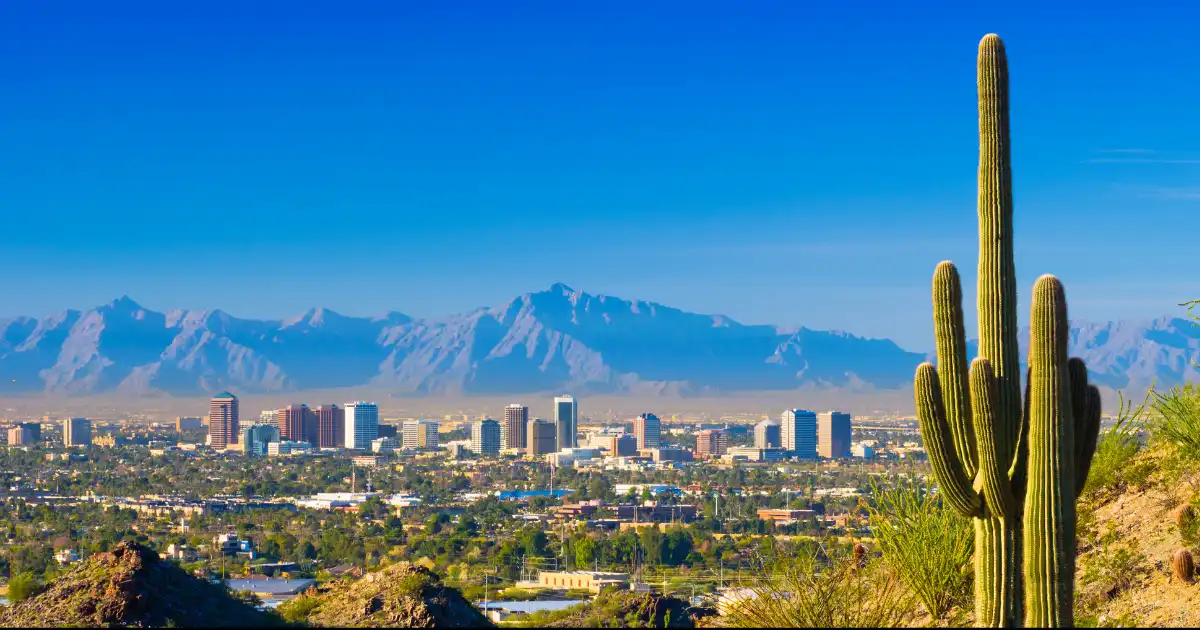
Phoenix and Nashville sit at opposite ends of a lot of things that matter day to day: climate, density, the kind of growth each city has absorbed, and what residents actually do with their free time. If you are moving from Phoenix to Nashville, the adjustment is real, but it is also one of the more straightforward relocations between two fast-growing Sun Belt-adjacent metros. Here is what actually changes.
The Tax Picture Is Closer Than People Expect
Arizona has a flat 2.5% state income tax on wages, in place since 2023, according to the Arizona Department of Revenue. Tennessee has zero. That is a real difference, but it is not the dramatic headline some moving guides suggest. A household earning $120,000 in Phoenix pays roughly $3,000 a year in Arizona income tax. Moving to Nashville eliminates that, which is meaningful but not transformative on its own.
Property taxes are the more surprising comparison. Arizona’s effective property tax rate runs around 0.48% to 0.63% of assessed value, according to the Tax Foundation, which is already among the lowest in the country. Tennessee’s effective rate is comparable, typically under 0.7%. Unlike the property tax gap between Tennessee and Texas, Phoenix transplants will not see a dramatic shift here. The real financial story in this move is housing cost and what you get for it, not the tax bill.
Housing: A Smaller Gap Than the Headlines Suggest
Phoenix’s metro median home price has sat close to $453,000 and stayed largely flat over the past year, according to Redfin’s Phoenix market data. Nashville’s metro median runs closer to $485,000, up roughly 7% year over year as of late 2025, according to RealTracs MLS data. Nashville is somewhat more expensive, but the gap is modest, not dramatic, and Phoenix currently has more inventory and more price cuts in active listings, which gives Phoenix sellers less leverage right now than Nashville sellers have.
What that price difference buys is also different. Phoenix homes typically come with larger lots and more square footage per dollar, a function of the desert’s flat, expansive buildable land. Nashville’s terrain is rolling and forested, which means smaller lots are common closer to the city and larger ones require a longer commute. Buyers coming from a newer Phoenix subdivision should expect older housing stock inside Nashville’s core neighborhoods, with more renovation and character but less open-concept new construction unless they specifically target it.
The Climate Difference Is the Real Story
This is the part that actually changes daily life. Phoenix summers regularly exceed 115 degrees Fahrenheit from May through September, with extended stretches where even nighttime lows stay above 90. Outdoor activity during those months happens before 8 a.m. or after dark, if at all. Nashville’s summers are hot and humid, typically peaking in the low 90s, which is genuinely uncomfortable but not the same category of extreme.
The trade is real seasons. Nashville has a true fall, with cooler temperatures and changing leaves through October and November, and a spring that runs cooler and greener than anything Phoenix offers. Winter brings occasional snow and consistently cold weeks, something most Phoenix transplants have not experienced in years. For people who miss seasonal change, this is often the single biggest quality-of-life shift in the move.
Humidity is the adjustment Phoenix transplants underestimate most. Phoenix’s dry heat and Nashville’s humid heat feel completely different at the same temperature. A 95-degree day in Nashville in July will feel more oppressive than a 105-degree day in Phoenix. Air conditioning costs and outdoor tolerance both need recalibrating in the first summer.
The Job Market Shifts Industries, Not Just Cities
Phoenix’s economy centers on semiconductor manufacturing, with Intel and TSMC both operating major facilities in the metro, alongside large employers like Banner Health, Wells Fargo, and GoDaddy. Nashville’s economy runs on healthcare. More than 500 healthcare companies are headquartered in the metro, according to the Nashville Health Care Council, anchored by Vanderbilt University Medical Center and HCA Healthcare, the largest for-profit hospital system in the country.
For professionals in healthcare, health tech, or adjacent services, Nashville is a significant career upgrade in terms of opportunity density. For professionals in semiconductor manufacturing or large-scale tech infrastructure, the move away from Phoenix means leaving an industry cluster that does not have a direct Nashville equivalent. Oracle’s 2021 headquarters relocation to Nashville has created meaningful tech sector growth, but it does not replace Phoenix’s manufacturing base for those specific careers.
Density, Traffic, and What “Close” Means in Each City
Phoenix sprawls across more than 500 square miles of metro area, and the experience of living there often means driving 30 to 45 minutes to reach anything outside your immediate neighborhood. Nashville’s metro footprint is smaller and more centralized, which means a 15 to 20 minute drive covers far more ground relative to Phoenix’s scale. Neither city has strong public transit, so both remain car-dependent, but Nashville’s compactness changes what “nearby” actually means day to day.
For buyers used to Phoenix’s grid of master-planned communities, Nashville’s mix of older, organically grown neighborhoods takes some adjustment. Streets curve, lot sizes vary block to block, and the city’s growth has been retrofitted into existing infrastructure rather than built from scratch the way much of Phoenix’s suburban expansion has been.
What to Actually Expect When You Arrive
Nashville’s culture is built around live music and a transplant-heavy population, which means meeting people and building a social circle tends to happen faster than in many cities. The food and restaurant scene has matured considerably beyond its reputation, with serious depth in barbecue, Southern cooking, and an increasingly diverse set of cuisines along corridors like Nolensville Pike. Phoenix transplants who enjoyed the outdoor lifestyle of hiking Camelback Mountain or South Mountain will find a different but comparable set of options: Percy Warner Park, Radnor Lake, and the Cumberland River Greenway offer genuine green space inside the metro, with the Great Smoky Mountains a few hours east for bigger trips.
For buyers ready to start narrowing down a Nashville neighborhood, the current market is worth a look before deciding where to focus a search. And for anyone navigating a job-driven relocation timeline from Phoenix, the relocation resources here cover the logistics specific to a compressed move.
Social Cookies
Social Cookies are used to enable you to share pages and content you find interesting throughout the website through third-party social networking or other websites (including, potentially for advertising purposes related to social networking).